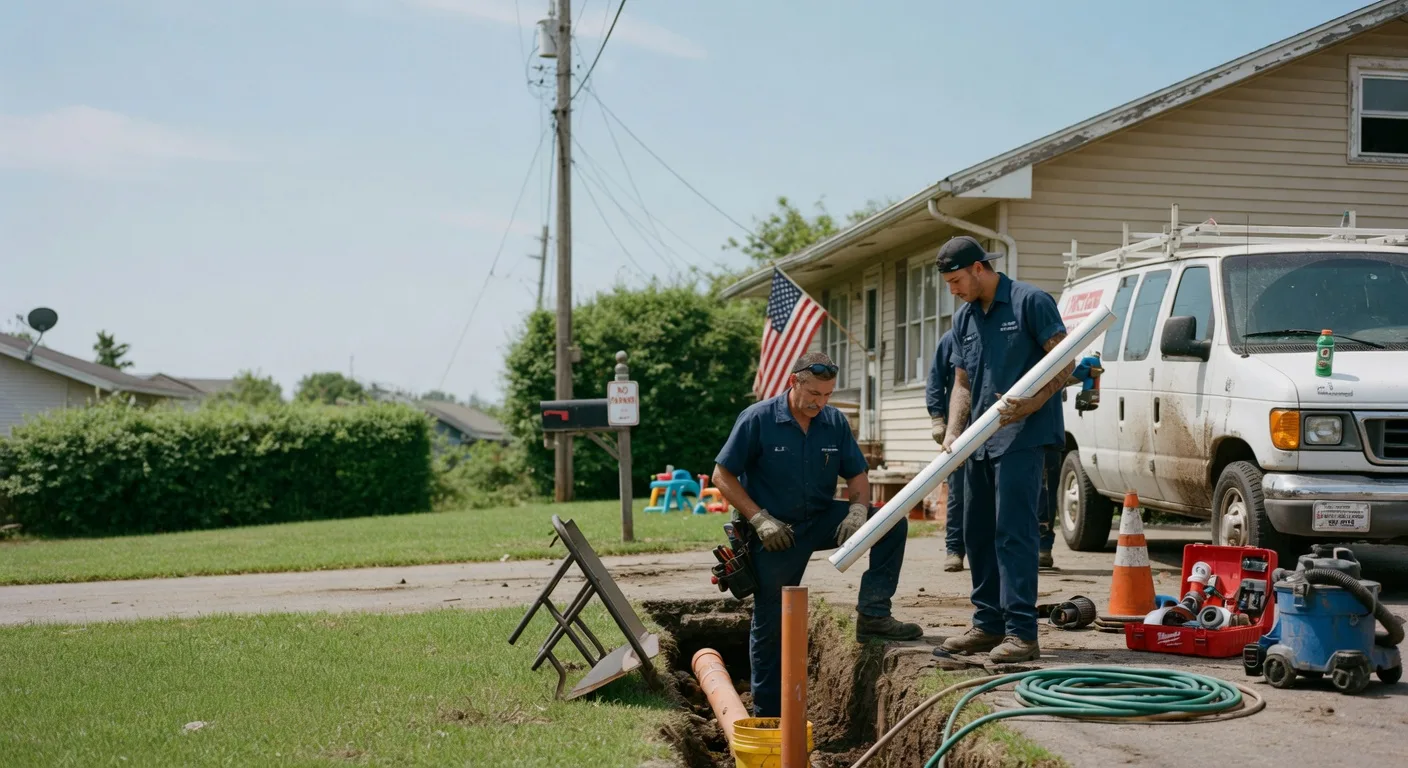
Should the job use a cable machine or hydro jetting?
It depends on what is in the pipe and how far it reaches. A cable machine, sometimes called a snake, is usually enough for a localized clog from hair, paper, or a small root intrusion. The rotating cable punches a channel through the blockage and restores flow, and for a single slow bathroom sink or tub that is all the job needs. The limit of a cable is what it leaves behind. It opens a hole through the middle of a clog, but grease, scale, and sludge stay stuck to the pipe wall, so the line narrows again within weeks. Hydro jetting sends high-pressure water through the line and scours the full interior wall. It is the better call for grease coating a kitchen line, recurring clogs in the same spot, roots that were cut back once and returned, or a line that keeps slowing down after cabling. A jetter needs a reachable cleanout, and it is not right for a pipe that is cracked or collapsing. That is where a camera comes in. A camera inspection shows the pipe's condition before the plumber chooses a method. The plumber decides after seeing the line, and that choice affects the cost of the visit for a home in Elkton, SD.
One practical point is that the choice is not always made in advance. A plumber often starts with a cable, finds out what is actually in the line, and then moves to a jetter if the cable returns with grease or sludge instead of a clean break. For that reason it helps to ask which method is planned and what would make the plumber change course. Jetting also depends on pipe condition, which is another reason a camera sometimes comes first on an older line. Clay and cast iron that are thin, cracked, or shifted can be damaged by high pressure, while newer plastic pipe handles it well. Water use matters too: a jetter sends a lot of water into the line, so the drain has to be open and flowing downstream. After either method, run water for several minutes and watch for slow spots or gurgling that might mean something is still in the way.
Why do my drains back up only when I run the washing machine?
When the washing machine drains and water comes up in the shower or a floor drain, the machine is rarely the problem. It dumps a lot of water in a short burst, and the line behind it cannot carry that volume away. Something is narrowing the pipe: grease and lint built up on the pipe wall, roots pushing in at a clay joint, or a bellied section that holds water and slows the flow.
Where it shows up tells you a lot. If only the laundry standpipe overflows, the blockage is probably in the branch line serving the machine, and a cable machine often clears that. If the lowest drains in the house gurgle or back up too, the blockage is further down, in the main line or a failed sewer lateral. That is a different job. It usually calls for hydro jetting or a camera inspection to see what is actually in there.
Safe homeowner checks: make sure the drain hose is not jammed tight into the standpipe, and try a smaller load. Do not keep running loads to see if it clears. Every cycle pushes more water toward the lowest opening in the house.
If water is coming up inside the house, stop using the washer, sinks and toilets and call. Expert Plumbers Co is a referral service, not a plumbing company. We refer you to a local plumber for Drain Cleaning in Elkton, SD: (380) 262-9173.
Watch for a pattern in when it happens, because that helps separate a drain problem from a venting or plumbing layout issue. If the backup always appears on the second or third load, the line is partly blocked and fills as the volume builds. If the washer is on a long run that ties into the main near a bathroom, the surge can push air and water into the nearest fixtures. Older homes often have laundry drains that were added later with a smaller pipe or an awkward connection, which cannot keep pace with a modern machine. A common mistake is placing a lint trap on the end of the drain hose and assuming it solves everything. It catches fibers, but it does not clear buildup already in the pipe. Tell the plumber the machine type and how many loads you run in a day.
Does hard water cause drain problems, or only water heater problems?
The bathroom sink used to run fine. Now it drains a little slower each month. That slow creep is the sign of scale, not a clog.
Hard water does more than coat a water heater. Minerals from the supply side leave a chalky layer inside a trap. In a bathroom line they bind with soap residue into a hard, grey film. The bore narrows a fraction at a time, so you notice a gradual slowdown rather than a sudden blockage.
Old cast iron is a different problem. Inside drain pipe that has been in the ground or a wall for decades, rust forms lumpy mounds called tubercles. These are not hard-water minerals. They are the pipe corroding from within, and they snag grease and paper.
The two tools do different work. A cable punches a hole through the build-up. Water drains again, but the scale stays on the wall and the line narrows again. Hydro jetting strips the wall back to the pipe surface.
Jetting old iron hard without looking first is a gamble, because thin, flaking pipe can fail under pressure. That is why a camera inspection comes first on old iron. It shows wall condition and cracks before anyone sets the pressure.
Safe homeowner check: find out whether one fixture is slow or every drain in the house is, then clean the visible stopper and trap.
Stop running water and call now if several drains slow together, or water backs up at a floor drain. One slow bathroom sink is usually a cable or trap job. A whole-house slowdown in old iron often needs a camera first and possibly jetting.
Expert Plumbers Co is a referral service. We connect you with an independent local plumber in Elkton, SD. Call (380) 262-9173.
A water softener changes the picture a little, and it is worth telling the plumber if you have one. Softened water leaves less mineral scale, but it can feel slippery and does not stop soap and hair from building up on the pipe wall. If your water is hard and you have no softener, the mineral film inside traps and short branch lines is the main cause of the slow creep. A simple habit helps: use a hair catcher in the tub and basin, and rinse the sink with hot tap water after use so soap does not cool and settle on the wall. Do not rely on vinegar or store-bought descalers to clear a drain, as they only treat the surface. In newer homes with plastic pipe, scale is mostly a trap and fixture issue. In older homes with iron or galvanized pipe, scale and corrosion together can narrow a line enough that replacing a section is more sensible than repeated cleaning.
Small flies keep coming out of the drain. Is that a clog?
Possibly, but not always. Small flies rising out of a drain are drain flies. They breed in the organic film that coats the inside of the trap and the first few inches of pipe, not in clean standing water. The film is the nursery.
A slow or partly blocked drain gives that film somewhere to sit, which is why flies and a slow drain often show up together. A drain nobody uses is a different case. When its trap dries out, flies and sewer odor both come straight up the pipe.
Safe homeowner check. Tape a card or a clear bag over each suspect drain overnight. Flies on the underside show which one they come from. Clean the strainer and the visible part of the drain. On a rarely used drain, pour in a bucket of water to refill the trap.
A cable machine is enough when one fixture is slow and no flies are involved. A cable only cuts a channel through the blockage and leaves the film on the pipe wall. A line that keeps producing flies after cleaning usually needs hydro jetting, which strips the wall back to bare pipe.
One fixture is a local job. Flies plus several slow drains point further down the line: grease build-up on the pipe wall, a bellied section holding water, or root intrusion at a joint. That calls for a camera inspection before anyone picks equipment.
Stop running water and call if drains gurgle, sewage odor fills the room, or water rises in the lowest fixture.
Expert Plumbers Co is a referral service. We refer homeowners in Elkton, SD to an independent local plumber for Drain Cleaning. Call (380) 262-9173.
The choice of cleaner matters. Bleach poured down the drain kills flies on contact but leaves the film they feed on, so they return within days. Boiling water helps on metal pipe but can soften or loosen joints on some plastic, so use hot tap water. A stiff brush on the strainer area and the first few inches of pipe does more than any liquid. An enzyme cleaner left overnight can digest the film, but treat it as upkeep, not a cure for a blocked line.
Check the overflow opening on sinks and tubs too. That channel is rarely cleaned and can breed flies.
Adult drain flies are weak fliers and rest on walls near the source, so counting them each evening shows whether cleaning is working. If the numbers do not fall within a week of thorough cleaning, the source is deeper in the line, or in a seldom-used floor drain in a basement or utility room that nobody thinks about.
The city is replacing the street main outside our house. Why are our drains acting up now?
The crew has been digging up the street for a week, and now your toilets gurgle, the tub drains slowly, or you saw muddy water in a floor drain. It is natural to suspect the work outside. There are a few real reasons why it can be connected.
Your house drain, called the lateral, runs from your foundation to a connection on the city main. When the main is dug up and replaced, that connection is cut and reattached. Vibration, trench work and heavy equipment can crack an older clay or cast iron lateral, push a joint out of line, or shift the pipe so water now pools in a low spot. Dirt, gravel and construction debris can also wash into the line while connections are open. The work can also cause temporary backups while flow is being rerouted or the new pipe is flushed.
The key question is whether it is one fixture or the whole house. A single slow sink is probably the fixture. If every drain is sluggish, gurgling or backing up at once, particularly the lowest ones, the trouble is in the lateral or the main, and the street work is a likely suspect.
Safe homeowner check: write down when the symptoms began and compare that to when work started near your address. Take photos of any muddy water, debris or wet floor. Check whether neighbors have the same trouble. Run one tap for a minute and see if the lowest drain in the house reacts.
Stop running water and call now if sewage is coming up in a tub or floor drain, if there is standing water in the basement, or if you smell sewage inside the house. Do not keep using the washer or dishwasher.
Tell the utility or the contractor promptly. They may have a claims process, and a delay can make it harder to show when the damage started. A cable machine may be enough if loose debris is the problem. If the lateral is cracked, offset or holding water, the plumber will need a camera inspection to see the damage, and hydro jetting can flush out silt and gravel.
Expert Plumbers Co is a referral service. We connect you with an independent local plumber in Elkton, SD. Call (380) 262-9173.
Ask the plumber to record the camera inspection and write down the footage location of any damage, so you can give it to the city or contractor. Scope depends on how deep the pipe is, how much has to be dug up or opened, parts and materials, and any permit or code requirement. Responsibility for the repair varies by area, so confirm who owns which section of the line.